Safety · 5 min read · 2025-09-17
Choking in Children: The Foods, the Risks, and the Right Response
Grapes, nuts, and hard lollies — and what to do when seconds count
Choking is one of the most frightening things a parent, grandparent, or childcare worker can witness — and one of the most time-critical. A complete airway obstruction means no air can enter the lungs, and without oxygen, a child can suffer brain damage within minutes. The good news is that most childhood choking incidents are preventable, and those that do occur can often be resolved quickly by a carer who knows the right technique.
The Top Choking Hazard Foods for Children Under 5
Westmead Children's Hospital research consistently highlights the same offenders: whole grapes (should always be quartered lengthways), whole cherry tomatoes, raw carrot sticks, whole nuts, popcorn, hard lollies and boiled sweets, large chunks of meat or sausage, cheese cubes, and sticky foods like large spoonfuls of peanut butter. The risk is not just food: small toys, coins, button batteries, and balloons are also common non-food choking hazards in this age group.
Recognising a Partial vs Complete Obstruction
A partial obstruction means some air can still pass. The child will typically cough forcefully, may be able to cry or speak, and may be distressed but breathing. In this case: encourage them to keep coughing. Do not interfere — a forceful cough is the body's most effective clearance mechanism. A complete obstruction means no air can pass. The child cannot cough effectively, cannot speak or cry, may be turning blue around the lips, and will be in obvious distress or rapidly losing consciousness. This requires immediate intervention.
Back Blows and Chest Thrusts
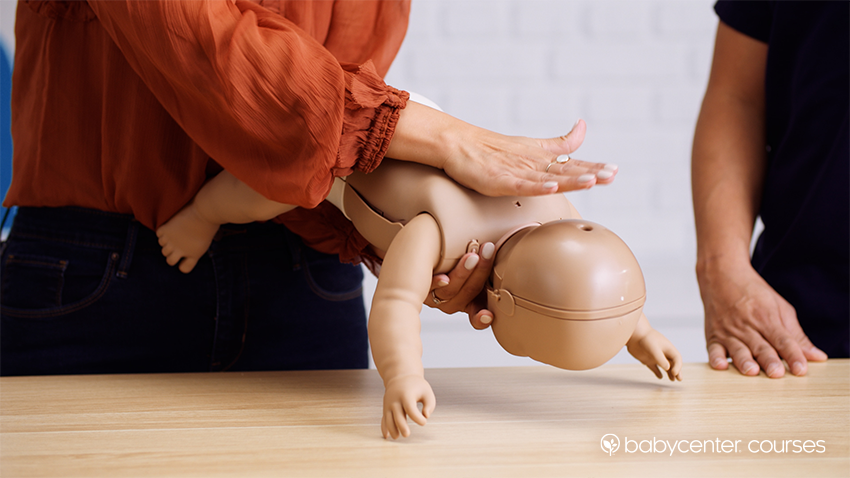
For a child with a complete airway obstruction, follow the current Australian Resuscitation Council guidance: deliver up to 5 firm back blows between the shoulder blades with the heel of your hand, checking after each blow to see whether the obstruction has cleared. If unsuccessful, deliver up to 5 chest thrusts. Alternate between back blows and chest thrusts until the object is expelled or emergency services arrive. For an infant, support them securely in a head-down position and use two fingers to deliver chest thrusts on the centre of the chest. For an older child, chest thrusts are delivered at the same point used for CPR compressions. Call 000 for an ambulance if the obstruction is not relieved.
When to Call 000
Call 000 immediately if the child cannot breathe at all, if they lose consciousness, if back blows and thrusts are not clearing the obstruction, or if the object has been cleared but the child is still struggling to breathe or is unresponsive. If the child becomes unconscious, begin CPR — chest compressions may help dislodge the object. Always seek medical review after any significant choking incident, even if the object appears to have cleared.
Learn the Technique Properly
Reading about back blows and chest thrusts is helpful — practising them on a manikin builds the genuine confidence to act. Horizon Training's first aid courses cover paediatric choking management as part of HLTAID011 and HLTAID012. Parents, grandparents, childcare workers, and anyone who spends time with young children should consider getting trained. A 90-minute investment could be the difference between a frightening moment and a tragedy.
Sources and further reading
- ANZCOR Guidelines — Management of Foreign Body Airway Obstruction — Australian Resuscitation Council
- Choking prevention and first aid — Raising Children Network