Workplace · 5 min read · 2025-09-03
First Aid at Sporting Events: Is Your Club Ready?
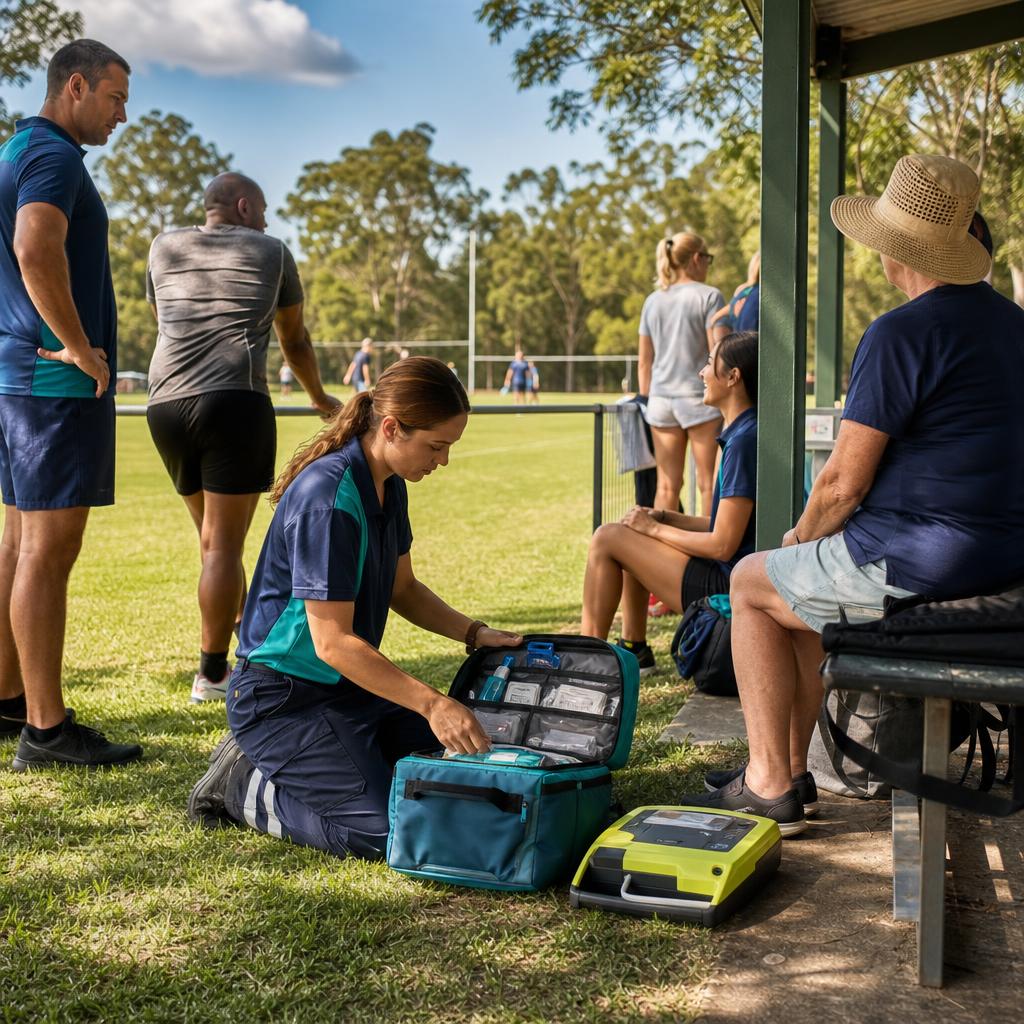
Cardiac arrest risk rises during exercise — and Queensland clubs now have new obligations
The collapse of athletes during sporting events — at elite and community level — made headlines in Australia throughout 2024. Sports Medicine Australia responded by calling for mandatory first aid officers and AED availability at all registered sporting clubs. Queensland Sport subsequently funded 500 AED placements at community clubs statewide. The message is clear: cardiac arrest can happen to anyone at any age during physical exertion, and the response in the first few minutes determines the outcome.
Why Cardiac Arrest Risk Rises During Exercise
Physical exertion increases the heart's workload significantly. For most people, this is entirely safe. But in individuals with underlying, often undetected cardiac conditions — including hypertrophic cardiomyopathy, long QT syndrome, or significant coronary artery disease — intense exercise can trigger a dangerous arrhythmia. The risk is highest during maximal effort and in the immediate recovery period. Age is not a reliable predictor: sudden cardiac arrest has occurred in elite juniors, weekend warriors, and fit masters athletes alike.
The Role of the First Aid Officer at Community Clubs
Every registered sporting club in Queensland is encouraged — and increasingly expected — to have a designated first aid officer at all competitions and training sessions. This person should be trained in HLTAID011 (Provide First Aid), know the location of the club's AED, and have a clear plan for calling 000 and managing bystanders in an emergency. Their role is not to replace paramedics — it is to keep the patient alive until paramedics arrive.
What the AFL, NRL, and Cricket Australia Require
At the elite and semi-professional level, governing bodies mandate specific medical personnel and equipment at all sanctioned matches. At the community level, requirements vary by sport and state, but the trend is toward mandatory AED provision and at least one trained first aid officer per event. Clubs that fail to provide adequate first aid coverage may face liability in the event of a preventable death or serious injury.
A First Aid Checklist for Club Administrators
Before each season, confirm that your club's AED is registered on the GoodSAM network and has current pads and battery. Ensure at least two committee members or coaches hold current first aid certificates. Brief all volunteers on the emergency response plan. Know your venue's address precisely so you can direct ambulances efficiently. Post the emergency action plan in the change rooms and at the canteen. Run a brief pre-season scenario with your first aid officer so the response is practiced, not improvised. Horizon Training can help your club meet these requirements with flexible, affordable training options.
Sources and further reading
- First aid in the workplace Code of Practice — Safe Work Australia
- Sudden cardiac arrest — Sports Medicine Australia
- Register an Automated External Defibrillator (AED) — Queensland Ambulance Service