CPR · 6 min read · 2026-01-14
How to Do CPR in 2026: What's Changed and Why It Matters
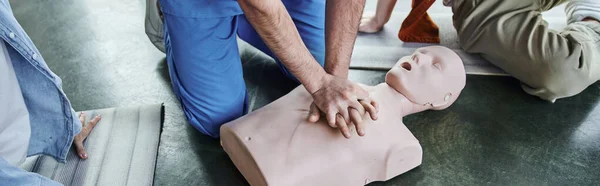
Master the updated CPR technique that gives Australians the best chance of survival
Every year, around 25,000 Australians suffer an out-of-hospital cardiac arrest. Fewer than 10% survive. The single greatest factor that improves those odds is bystander CPR — someone nearby who acts immediately. Yet surveys consistently show fewer than half of Australians feel confident enough to perform CPR. Part of that hesitation comes from uncertainty about technique, and whether what they learned years ago is still correct.
What the Australian Resuscitation Council Updated
The Australian Resuscitation Council (ARC) regularly reviews evidence and updates its guidelines to reflect the best available science. Recent updates have refined the recommended compression rate (100–120 compressions per minute), confirmed the importance of full chest recoil between compressions, and clarified when rescue breaths add value versus when compressions alone are sufficient. The overall DRSABCD framework — Danger, Response, Send for help, Airway, Breathing, CPR, Defibrillation — remains the gold standard in Australia.
Compression Rate and Depth: Getting It Right
Compressions should be delivered at 100–120 per minute — roughly the tempo of 'Stayin' Alive' by the Bee Gees. Push down at least 5–6 cm on an adult chest, and allow the chest to fully rise between each compression. Incomplete recoil reduces the heart's ability to refill with blood, cutting the effectiveness of each push. Position your hands in the centre of the chest, one on top of the other, with straight arms and body weight doing the work — not just your wrists.
Rescue Breaths: When to Include Them
For adult cardiac arrest with an unknown cause, hands-only CPR (compressions without rescue breaths) is now widely supported and equally effective in the first few minutes, when oxygen levels in the blood remain adequate. However, rescue breaths become important when the cause is drowning, choking, or respiratory arrest — situations where oxygen depletion is the primary problem. For children under 8, rescue breaths are always recommended. If you are trained and willing, a 30:2 ratio (30 compressions to 2 breaths) remains the standard full CPR approach.
How Long Should You Keep Going?
Keep performing CPR until the person shows clear signs of life (breathing normally, moving purposefully), a defibrillator is attached and ready to analyse, a trained first aider takes over, or you are physically unable to continue. Fatigue sets in quickly — if others are present, rotate every 2 minutes to maintain compression quality. Poor quality compressions due to fatigue are less effective than handing over to a fresh pair of hands.
Where to Get Certified on the Sunshine Coast
Knowing the theory is valuable, but hands-on practice with a manikin is what builds the muscle memory and confidence to act in a real emergency. Horizon Training delivers nationally recognised CPR courses (HLTAID009) across the Sunshine Coast, including Coolum Beach, Noosa, Maroochydore, and surrounding areas. For an initial CPR course, the practical training session is approximately 60 minutes, not including the online learning completed beforehand. A refresher option is also available for eligible students, with no online work required. The refresher is completed on the training day and includes a practical assessment and 20 questions, taking approximately 90 minutes. CPR certificates are valid for 12 months. Book online or contact us to arrange a group or onsite session.
Sources and further reading
- ANZCOR Guideline 8: Cardiopulmonary Resuscitation — Australian and New Zealand Committee on Resuscitation
- HLTAID009 Provide cardiopulmonary resuscitation — Australian Government training.gov.au