HLTAID012 – Provide First Aid in an Education and Care Setting
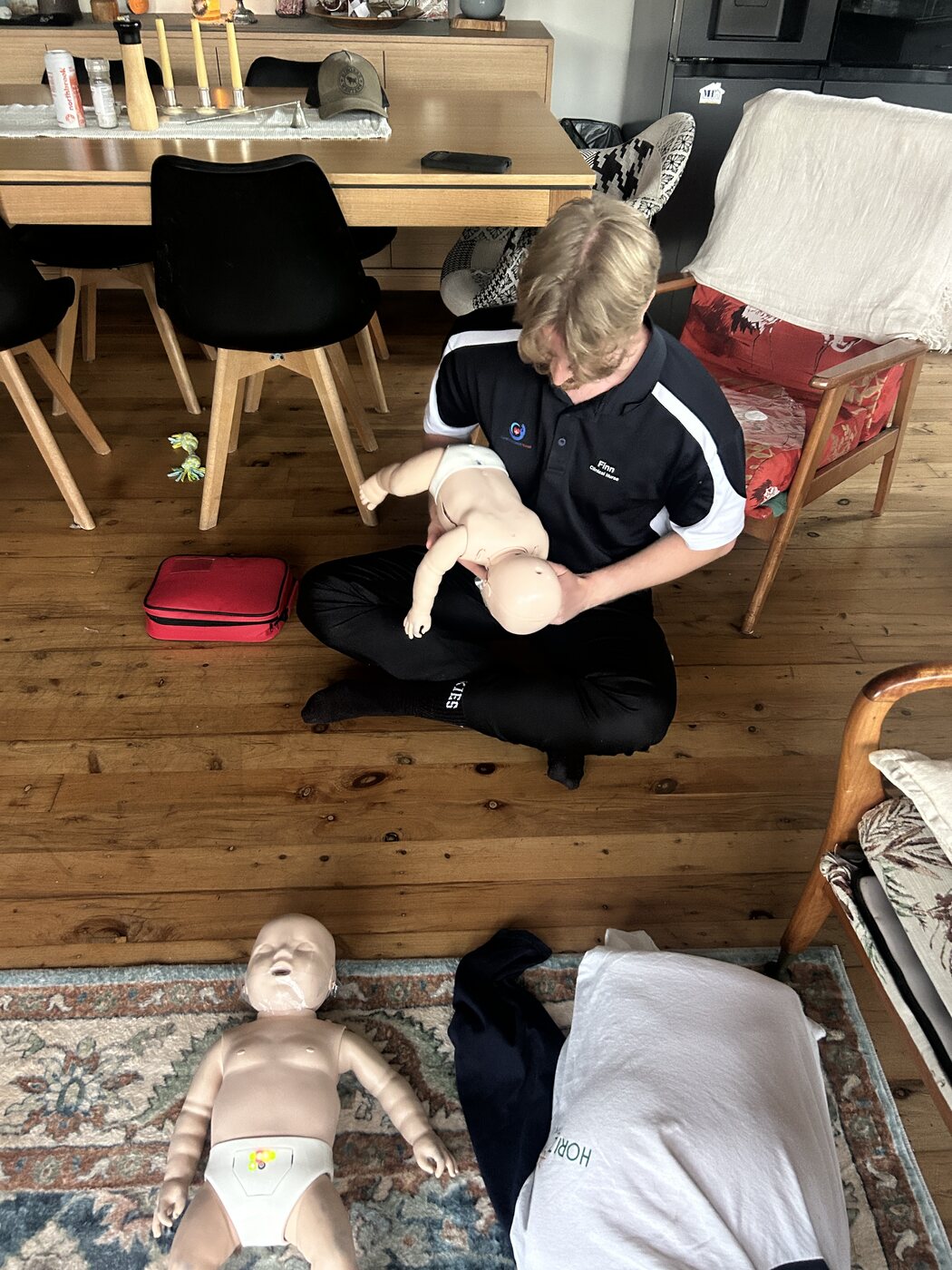
Respond to first aid needs of infants and children in education and care settings. Follows ARC and national clinical body guidelines.
- Price
- $130
- Duration
- Blended: Approximately 2.5 hours of practical face-to-face training, with online learning completed beforehand; Fully face-to-face: At least 8 hours — available on request
- Locations
- Coolum Beach, Noosa, Yandina, All Sunshine Coast locations
- Certificate
- Renewal: 36 months
Course overview
Designed for educators, childcare workers, and those working in education and care settings, this course covers responding to first aid needs of infants and children. It follows Australian Resuscitation Council guidelines and national clinical body recommendations, covering both emergency and non-emergency situations in a childcare or education environment.
Units included
- HLTAID012 – Provide first aid in an education and care setting
- HLTAID011 – Provide first aid
- HLTAID009 – Provide cardiopulmonary resuscitation
- HLTAID010 – Provide basic emergency life support
Assessment requirements
- Perform CPR on an adult (incl. the use of an AED and placing a casualty into the recovery position)
- Perform CPR on a child
- Perform CPR on an infant
- Manage a child casualty with anaphylaxis
- Manage a child casualty with asthma
- Manage a choking child and infant casualty
- Manage a child casualty with non-life-threatening bleeding requiring minor wound cleaning
- Manage a child casualty with shock
- Manage a child casualty with a nosebleed
- Manage a child casualty with a fracture and dislocation
- Manage a child casualty with a sprain and strain
- Manage a child casualty with envenomation (snake/funnel-web spider bite)
- Documentation — The student must complete all documentation according to the required standard.
- Complete a first aid incident report form based on the simulated first aid scenario
- Theory assessment: A written assessment consisting of multiple-choice questions.
Entry requirements
- An official form of photo identification (e.g., driver’s licence, passport, or student ID).
- Physical capability to meet the demands of the practical demonstration skills, including CPR.
- Learning: Follow instructions, ask for help, and learn from feedback.
- Reading: Read short texts such as signs and step-by-step instructions.
- Writing: Write short notes or fill out a simple form.
- Oral communication: Listen carefully and speak clearly in a classroom environment.
- Numeracy: Count and use simple numbers.
- Digital literacy: Use a mobile phone or basic device to read messages, follow online instructions, complete online forms, or access learning resources.